This comprehensive guide breaks down every common and unique form of public transportation in Indonesia, complete with logistics on how to get them, how to pay, and insider tips.
1. Modern Urban Transit (Big Cities like Jakarta & Palembang)
If you are exploring metropolitan centers, Indonesia offers world-class, budget-friendly mass rapid transit systems that make getting around effortless.
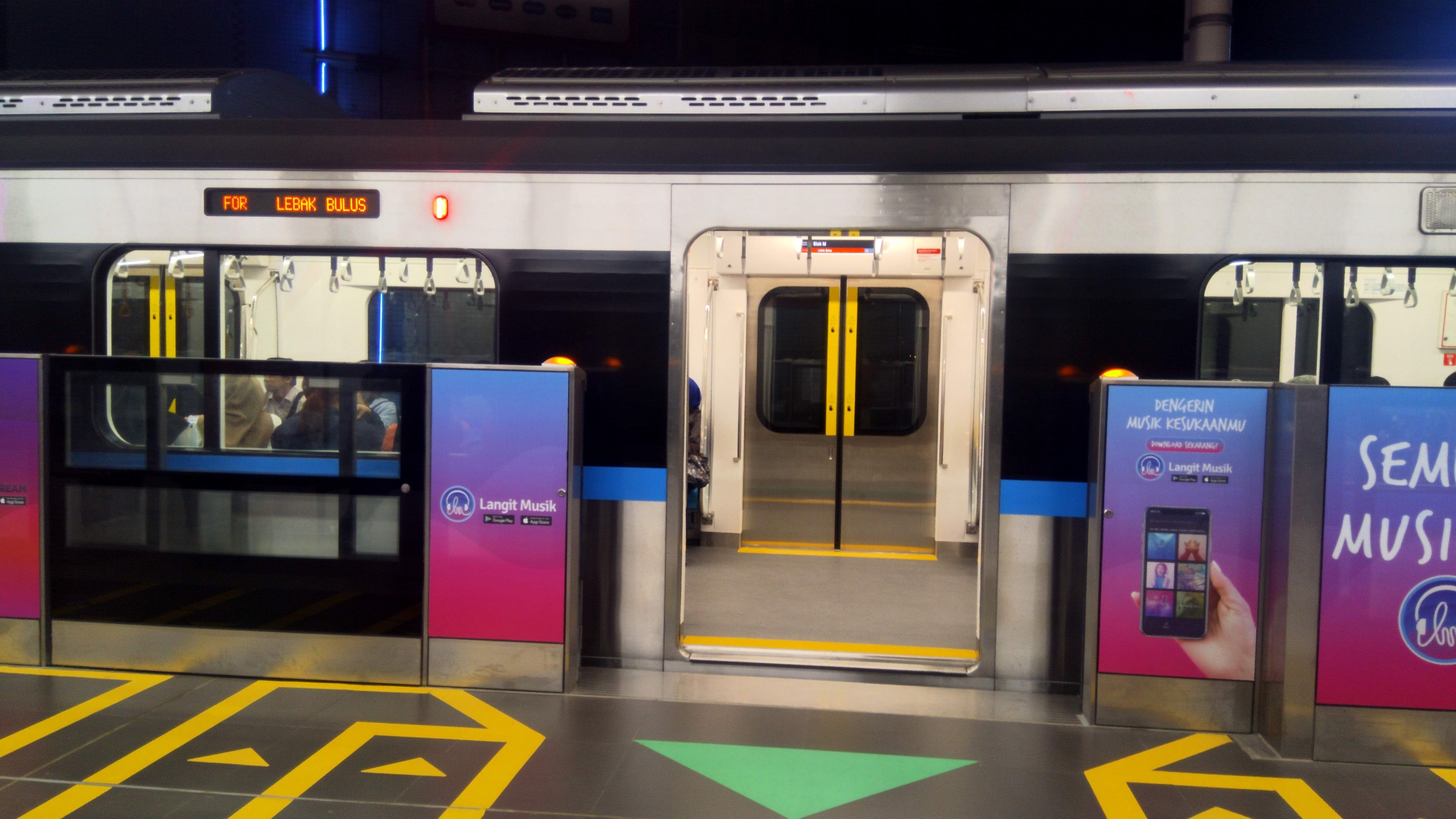
MRT & LRT (Mass Rapid Transit & Light Rail Transit):
Where to Find: Jakarta (and the LRT in Palembang). Jakarta's MRT line runs smoothly from South Jakarta down to the city center (Bundaran HI).
How to Get It: Enter any modern, air-conditioned station. Clear digital signage and English-speaking staff make it very tourist-friendly.
How to Pay: Strictly cashless. Tap in and tap out using a multi-use transit card (*JakLingko*, KMT) or supported electronic money cards (E-Money Mandiri, BCA Flazz, BNI TapCash).
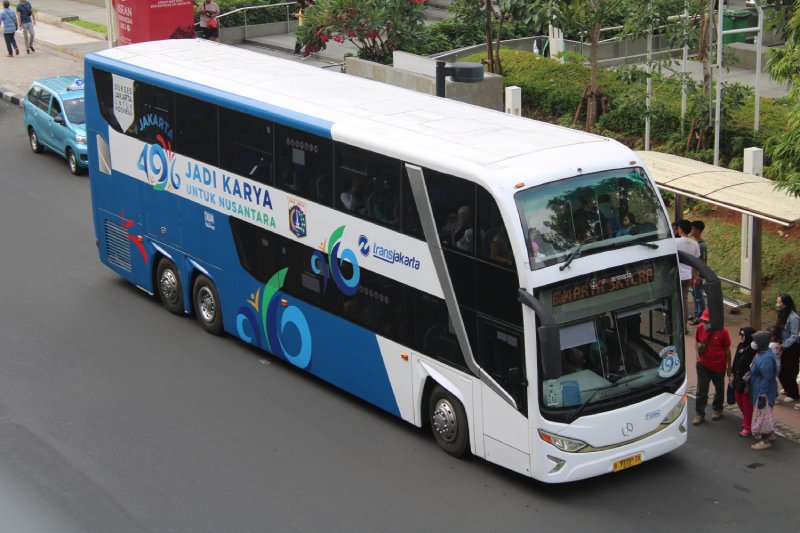
TransJakarta (Busway):
Where to Find: The backbone of Jakarta's public transit, operating the world's longest bus rapid transit route network via dedicated lanes.
How to Get It: Enter through elevated, secure bus stations linked by pedestrian bridges.
How to Pay: Tap your electronic card at the station gates. Fares are remarkably cheap (typically a flat rate of IDR 3,500).
2. Trains & Intercity Rail (Mainly Java & Sumatra)
For long-distance travel, abandoning the chaotic highways for the railway is widely considered the best way to experience Indonesia.
Intercity Express Trains (Kereta Api):
Where to Find: Spanning across Java (connecting Jakarta, Bandung, Yogyakarta, Surabaya, and Malang) and parts of Sumatra.
Classes Available: Executive (fully air-conditioned, spacious reclining seats), Business (mid-range comfort), and Economy (cheaper, though newer economy steel carriages are surprisingly comfortable and air-conditioned).
How to Get It: Book well in advance (especially during holidays or weekends) via the official Access by KAI app or online booking platforms. Arrive at the station with your passport or booking code to print boarding passes at self-service kiosks.
Commuter Trains (KRL):
Where to Find: Greater Jakarta (*Jabodetabek*) and Greater Yogyakarta-Solo.
How to Pay: Tap in/out using electronic money cards or digital QR tickets via transit apps.
3. The Ubiquitous Road Warriors: Minivans & Buses
When you venture off major rail lines or into smaller cities, road transport takes over.
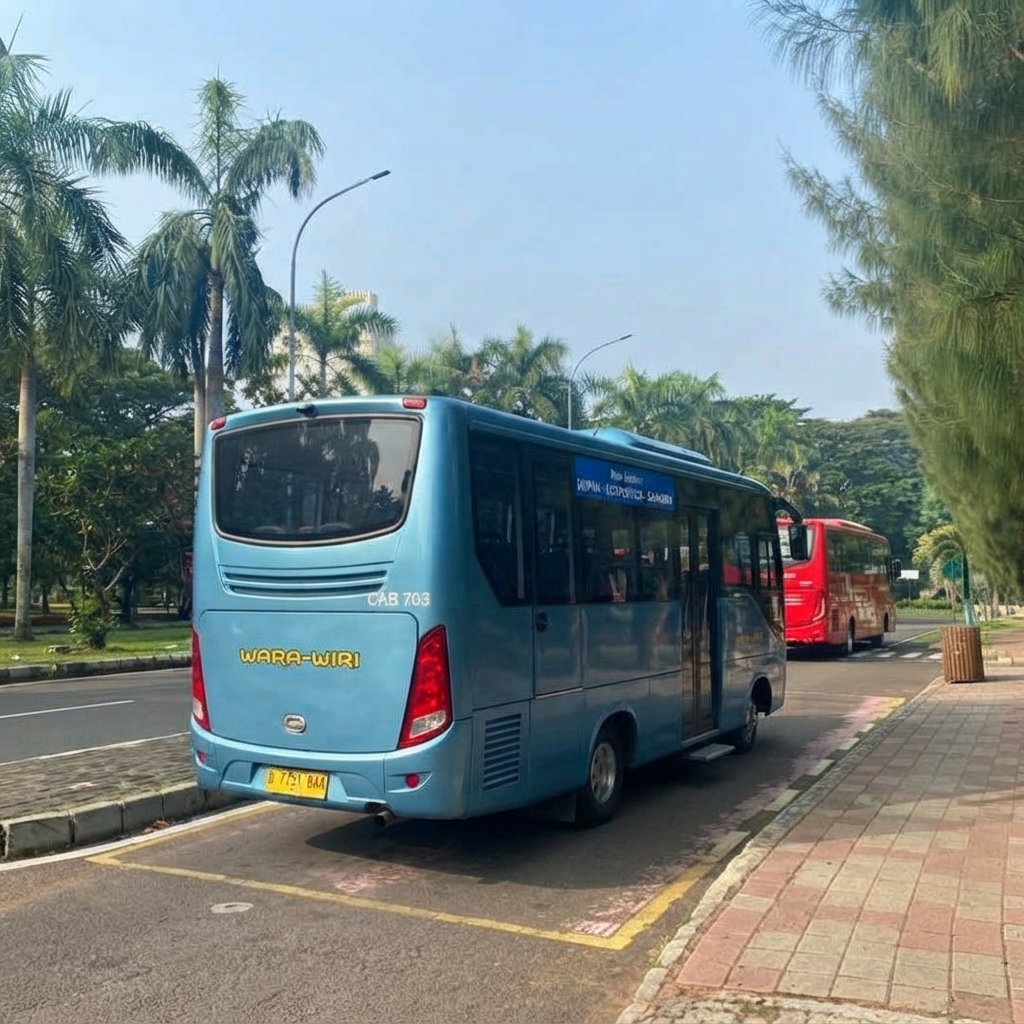
Angkot (Angkutan Kota):
Where to Find: Every city and town across Indonesia. These are small, brightly colored minivans that run fixed local routes.
How to Get It: Wave your hand on the side of the road to flag one down. Tap the ceiling or shout "Kiri, Bang!" (Left side, brother!) when you want the driver to pull over.
How to Pay: Cash only. Always keep small Indonesian Rupiah banknotes (IDR 2,000 to 5,000) handy. Ask your hotel or check local apps for typical fares to avoid paying the "foreigner tax."
Intercity Buses (Bus Antar-Kota):
Where to Find: Operating out of major regional terminals (like Giwangan in Yogyakarta or Bungurasih in Surabaya) to connect provinces.
How to Get It: Head to the terminal or book through local agents. Major cross-island routes (like Java to Bali or Sumatra) feature large, air-conditioned executive coaches.
4. Unique Traditional & Local Transportation
No trip to Indonesia is complete without experiencing its iconic, colorful traditional transport modes, best suited for short hops and cultural immersion.
Ojek (Motorbike Taxis):
Where to Find: Street corners, market entrances, and alleyways nationwide.
How to Get It: You can flag down traditional freelance drivers at dedicated ojek bases (*pangkalan*), but for safety and fixed pricing, it is much easier to use ride-hailing apps like Gojek or Grab.
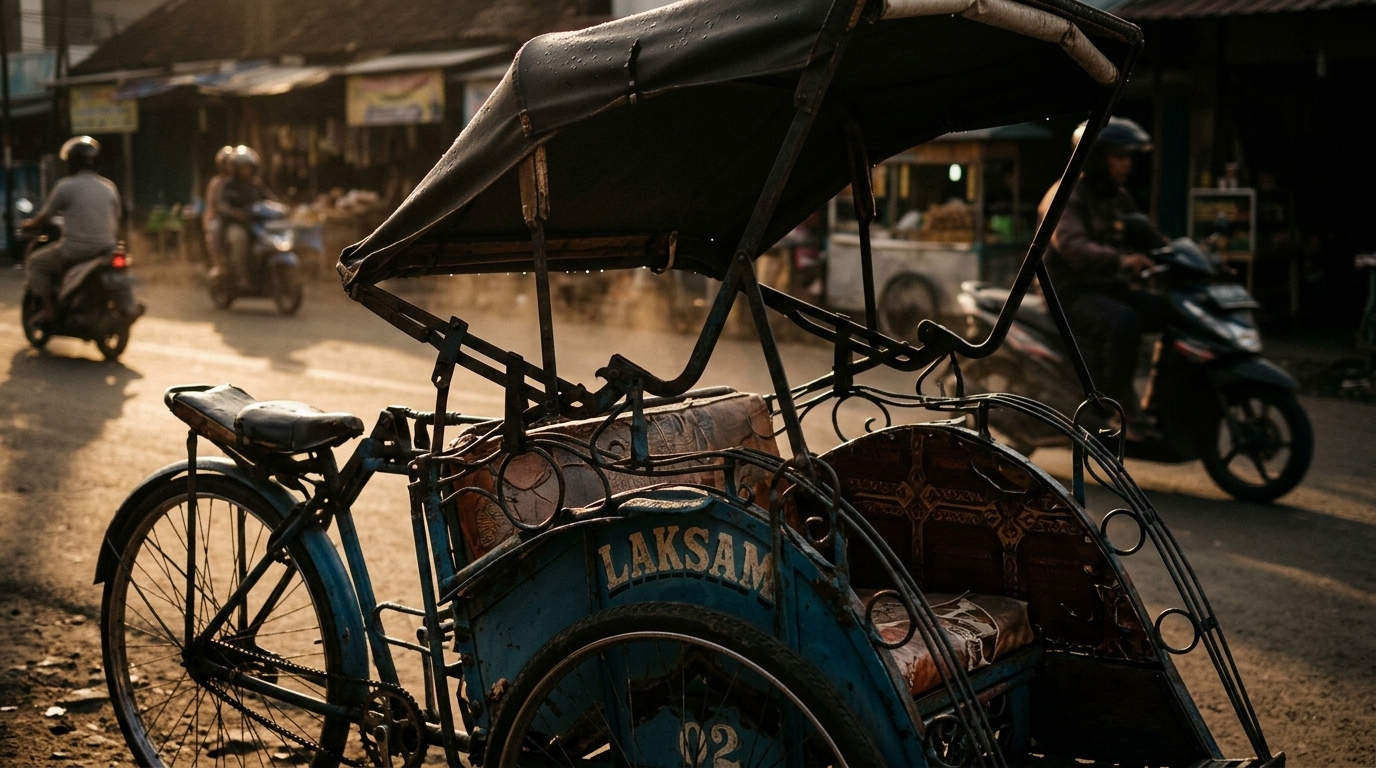
Becak (Traditional Rickshaws):
Where to Find: Quiet neighborhoods, cultural old towns (like Yogyakarta or Solo), and smaller provincial towns. Pedal-powered (or motorized in some regions), it offers a slow-paced, breezy way to view street life.
Tip: Always agree on the fare before you step inside to avoid awkward haggling at your destination.

Bajaj (Auto-Rickshaw/Tuk-tuk):
Where to Find: Urban neighborhoods, especially in Jakarta. These noisy, three-wheeled motor vehicles are great for dodging tight traffic shortcuts.
How to Pay: Cash or booked digitally via ride-hailing apps.
5. Island Hopping: Ferries & Boats
Because Indonesia is an archipelago, maritime transport is a literal lifeline.
Pelni Ferries:
Where to Find: Major commercial ports across the country. These massive state-owned ships connect distant islands on multi-day voyages.
ASDP Ro-Ro Ferries:
Where to Find: Short inter-island crossings, most famously the route between Java and Bali (Ketapang to Gilimanuk) or Java to Madura. They carry foot passengers, cars, and motorbikes 24/7.
Speedboats & Fast Boats:
Where to Find: Popular tourist island corridors, such as Bali to the Gili Islands or Lombok, and Thousand Islands (*Pulau Seribu*) departures from Jakarta. Tickets can be booked online or at coastal piers.
Golden Rules for Seamless Transit in Java
Download Gojek and Grab Immediately: These two apps are lifesavers. They eliminate language barriers, stop price-haggling for rides, and allow you to order food, cars, or motorbike taxis with transparent digital payment.
Always Carry Cash in Small Denominations: While big cities and trains are heavily cashless, traditional angkots, rural buses, becaks, and street vendors rely strictly on physical Rupiah. Keep plenty of IDR 2,000, 5,000, and 10,000 notes ready.
Build in Buffer Time: Traffic congestion in major hubs like Jakarta, Surabaya, or Bandung can be severe, and ferry timetables are routinely affected by weather and ocean swells. Never schedule a tight connection right after a long overland or maritime transit leg.